Short version: know where your main water valve is, decide with a plumber whether to shut it off, set the air conditioner to a moderate temperature, put leak sensors where water is most likely to start and give a trusted person a key, a phone number and a reason to visit the house every week or two.
Why an empty Sun City home needs a water plan
Sun City was built as a retirement community, and a large share of its homeowners spend part of the year somewhere else. Some leave when summer arrives, others leave for the holidays or for a few weeks in winter. A home that is occupied every day usually shows a leak quickly, because someone hears the water, sees the stain or notices a smell. An empty one does not have that early warning. A pipe that drips for an hour in an occupied house can run for a month in an empty one.
The damage grows with time, and it grows in a pattern. In the first day or two, water soaks into drywall, baseboards and flooring. Within a week, materials swell, paint peels and carpet pad breaks down. After a few weeks in a closed house, mold can establish itself on drywall, in the carpet and inside the wall cavity. At that point the job is no longer simply drying. It is demolition, containment and rebuilding. The good news is that most of this is preventable with a short list of habits, and that is what this guide covers.
What actually goes wrong while you are away
Most vacant-home losses come from a short list of causes. The water heater is the most common, because a tank that is twenty years old can rust through at the bottom and release forty or fifty gallons, plus whatever the supply line keeps feeding in. Supply lines to toilets and sinks are next, usually a braided hose that fails at a fitting, and the water keeps flowing because the pressure never stops. A refrigerator ice maker line can leak behind the appliance for weeks, and nobody sees it. A clogged air conditioner condensate line can overflow into a ceiling or a closet, and in summer an air conditioner in a closed house makes a lot of condensate.
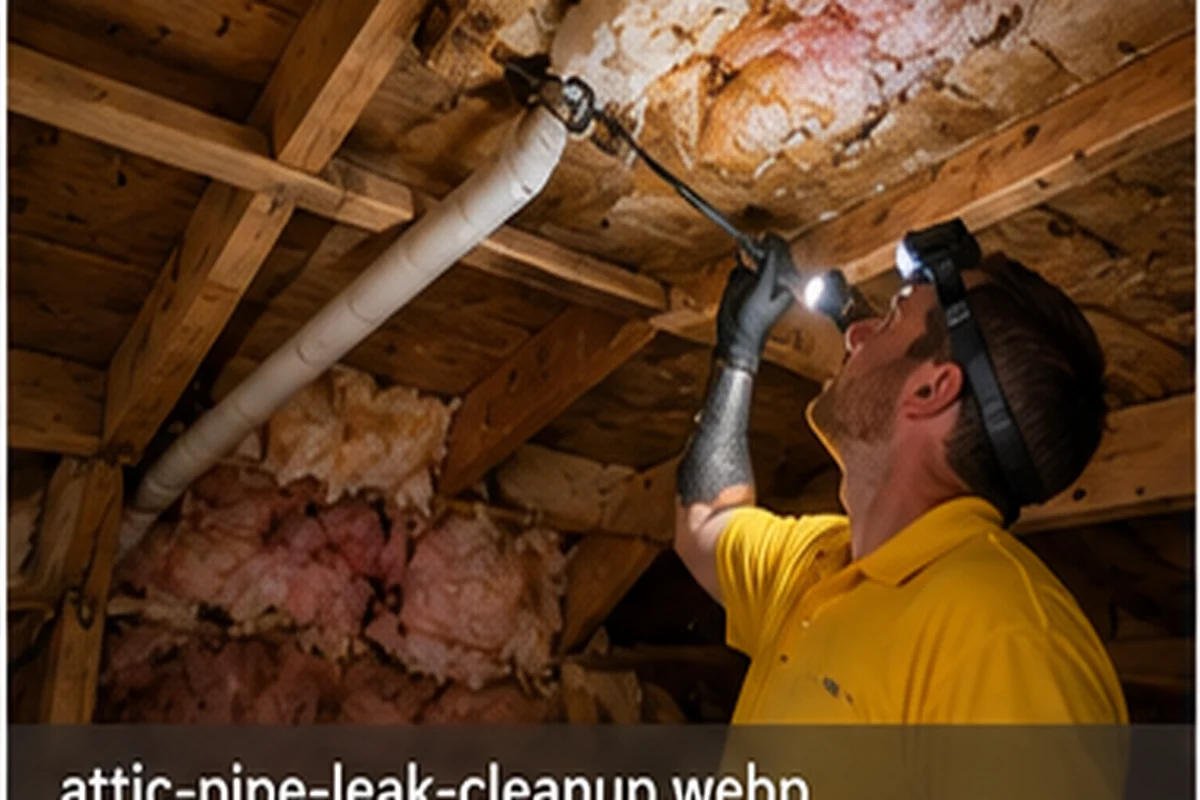
Others are less obvious. A pinhole in an older copper or galvanized pipe inside a wall can spray a fine mist for weeks. An irrigation valve that sticks open can saturate the soil next to a slab. A roof leak after a monsoon storm can soak insulation and ceiling drywall, and with no one in the house, the stain can spread for the rest of the season. A hose bib that splits in winter and keeps dripping can undermine the area around a foundation. Our page about vacant and snowbird home leak remediation describes what we find when we open the door of a house after one of these events.
Seven things to do before you leave
Find and test the main shutoff
Turn the valve off and on again so you know it works and everyone who will check the house knows where it is. A valve that has not been moved in years can stick or leak at the handle, and it is better to find that out on a calm day. If it is stiff or weeping, ask a plumber to replace it before you leave.
Decide about the water heater
An empty house does not need a tank of hot water. Many owners turn the heater to its vacation setting or switch off the power or gas, and some shut the cold water inlet as well. Check the tank for rust at the base and for dampness around the fittings, and have a plumber look at any heater that is more than ten or twelve years old.
Check every supply line you can see
Look under sinks, behind toilets and at the washer and dishwasher connections. Braided stainless lines are better than old rubber hoses, and any hose that is cracked, bulging or stained should be replaced before you go.
Clear the air conditioner drain
Pour a cup of vinegar or ask your HVAC technician to flush the condensate line, and check that the pan under the air handler is dry and that any float switch works. A drain that is partly clogged in May becomes a flood in August.
Turn off the washer, the ice maker and the irrigation
Close the valves at the washer, and turn off the ice maker or shut its supply. Set irrigation to a schedule, or turn it off, and have someone check that a valve is not stuck open.
Install leak sensors
Put battery-powered sensors on the floor near the water heater, under the kitchen and bathroom sinks, behind the refrigerator and near the air handler. Choose models that send an alert to your phone and to the person who is checking your house.
Leave information, not just a key
Give your key holder the location of the main shutoff, the panel, your plumber's number, your insurance agent's number and ours. Write it on a page and tape it inside a kitchen cabinet.
Should the main water be shut off?
This is the question people ask most, and the honest answer is that it depends. Shutting off the water at the main is the single most effective way to stop a supply-line leak, because without pressure nothing can flow. If you are gone for months and you have no automatic irrigation or pool autofill that needs the water, closing the main is a strong option.
There are trade-offs. Irrigation and pool systems may need water to keep plants and equipment healthy. Some homeowners policies expect the water to be shut off in a vacant home, and some do not. A fire sprinkler system, if you have one in an association building, is a separate matter. And if you shut the main off, you will want to open a faucet or two to drain the lines, and shut the water heater so the element does not burn out. Talk to a licensed plumber about what is right for your house, and read your policy for any clause about vacancy.
Setting the air conditioner while you are gone
It is tempting to turn the air conditioning off to save money, and in Sun City, where summer afternoons are very hot, that can create a different problem. A closed house with no cooling can reach temperatures that stress plastic fittings, dry out seals, warp wood and damage electronics. When the system is later switched on, any moisture that has built up inside walls and carpets can bloom into mold as the air cools.
A moderate steady setting is a better choice. Many owners choose a thermostat setting in the mid-to-upper eighties in summer, which is warm enough to save energy and cool enough to keep the house from baking. Ask your HVAC company what setting they recommend for your system. Whatever you choose, make sure the system is serviced before you leave and that the condensate drain is clear, because an air conditioner that runs all summer in an empty house is working with no one nearby to notice a problem.
Choosing who checks the house
A trusted person who visits regularly is worth more than any gadget. A neighbor, a friend, a property manager or a house-sitting service can all do the job, as long as they know what to look for and have a reason to come at a regular interval. Every one to two weeks is a good rhythm, and after any big storm, they should visit the same day.
A visit should take ten minutes. They walk through every room and look for stains, damp spots, peeling paint or a musty smell. They listen for the sound of running water, and they check under the kitchen sink and around the water heater. If the main is off, they confirm it is still off. If you have left the water on, they can check the water meter: with everything turned off inside, a spinning dial or a moving digit means water is flowing somewhere. Ask them to send you a photograph from the last room they visit, so you know it happened.
Leak sensors and automatic shutoff valves
Technology can help, within limits. A battery-powered leak sensor is cheap, and it sounds an alarm or sends a phone alert when it gets wet. In an empty house, an alarm no one hears is only useful if it sends a message, so choose a model that connects to wifi and make sure the wifi stays on. A cellular-connected sensor is more reliable if your internet service is not guaranteed.
A whole-house automatic shutoff valve, installed on the main line by a licensed plumber, goes further. It senses a flow pattern that suggests a leak and closes the valve itself. That is worth a conversation with a plumber if you are away a lot. Remember that a shutoff does not tell you the leak was fixed, and a battery or wifi can fail, so a sensor system is a supplement to a person checking the house, not a replacement.
Coming home: the first hour back
When you return, resist the urge to unpack first. Walk through the house before you open any water valves. Look at the ceilings and the baseboards, smell the air in closets, and check under the sinks. If everything looks dry, open the main valve slowly and listen for water running. Then check again after ten minutes and after an hour, looking at the same places. Turn the water heater back on once the tank is full, and run each faucet and toilet to flush the lines.
If you notice a musty smell, a stain that was not there when you left, or a floor that feels soft, treat it as a loss. Shut the water off again, take photographs and call a plumber and a restoration company. It is much better to find a problem on day one than on day thirty.
What to do if your key holder finds water
Tell your key holder what to do before you leave. If they find water, they should shut off the main, take photographs of what they see, and call you. Then call a plumber, and call us. If you are out of the country or unreachable, give them written authority to let a restoration company in and to approve emergency work, such as extraction and drying, so the house is not left wet while you travel.
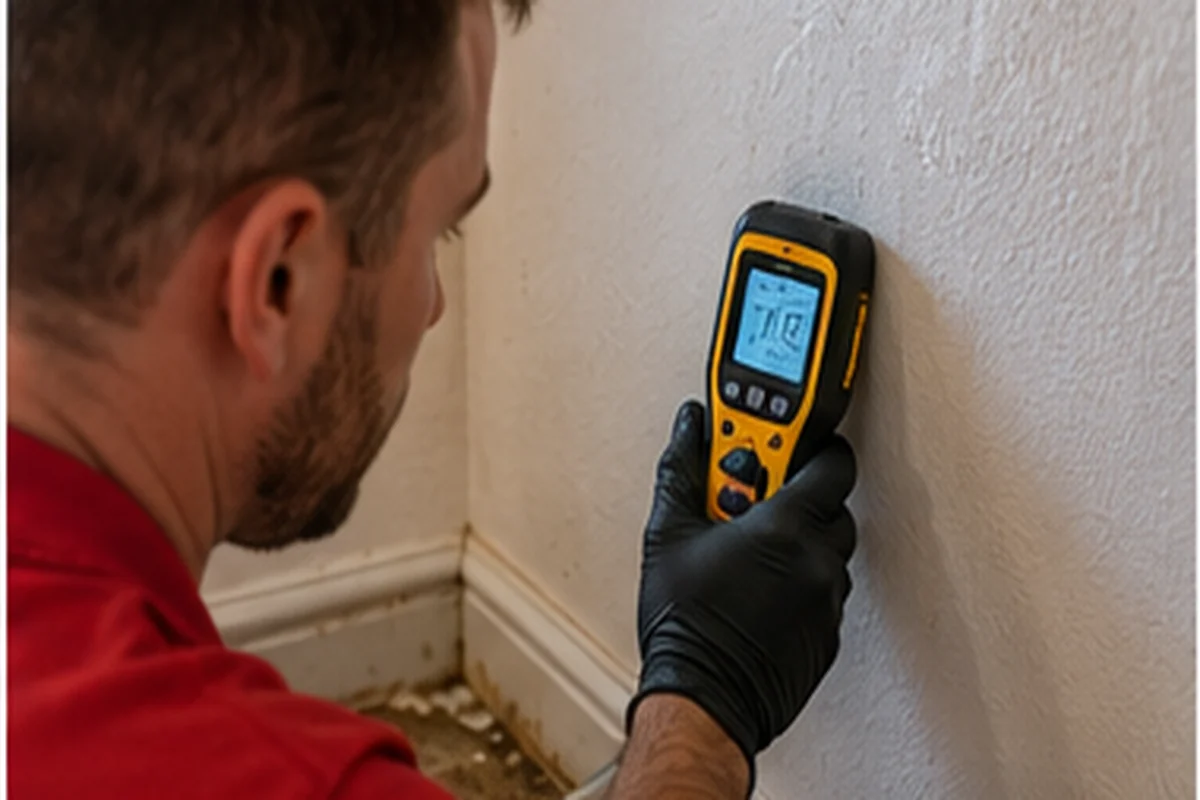
We handle this situation often. We photograph and measure the damage, send you a report and a written scope, and wait for your approval before removing anything, unless the situation is urgent. We work with your key holder, your property manager and your insurer, and we document every step. See moisture mapping for how we find hidden water, and mold inspection for what happens if the house has been wet for some time.
Leaving in winter
Not everyone leaves in summer. Some Sun City residents travel during the holidays or spend part of January and February elsewhere, and a winter absence adds a different risk. Pipes in attics and exterior walls can freeze on a cold night, and the water often appears only when the ice thaws in the morning. If you leave in the cold months, read our guide to frozen and burst pipe damage in Sun City, AZ, and make sure the thermostat is set so the house does not go cold. If you want to understand what freeze damage looks like after the fact, we explain it in what needs drying after a winter pipe burst.
Questions
Is it better to leave the water on or off?
Off is safer for supply-line leaks, as long as nothing in the house or yard depends on it. Ask a plumber about your own setup, and read your insurance policy for any vacancy requirements.
How often should someone check the house?
Every one to two weeks is a good rhythm, plus a visit right after a storm or a power outage.
Are leak sensors enough on their own?
No. They are a good early warning, but they need power, a connection and someone who sees the alert. A regular visit by a person is the better safeguard.
What if I find damage when I get back?
Shut off the water, photograph everything and call a plumber and a restoration company. Send us the details and we will tell you what we would need to see.